Agriculture
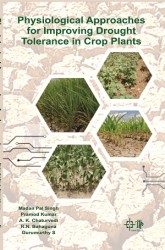
Physiological Approaches for Improving Drought Tolerance in Crops Plants
₹1,525.50₹1,695.00You save ₹169.50
- ISBN
- 9789391734978
- Year
- 2024
- Binding
- Hardbound
- Language
- English
- Total pages
- 190
- Ebook
- Not available
About the Book
Globally, drought is one of the most serious constraints for crop production and is projected to worsen with anticipated climate change. Dry regions in India comprising of about 94 mha and about one-third of India’s population live in these areas and more than 50% of the region is affected by drought once every four years. Drought is a predominant cause of low yields worldwide. Inter-disciplinary scientists have been trying to understand and dissect the mechanisms of plant tolerance to drought stress using different approaches; however, success has been limited. Tolerance to drought is a complex quantitative trait controlled by multiple genes. To address the complexity of plant responses to drought, it is vital to understand the physiological basis of this response. Plant physiological research improves our understanding of the complex network of drought tolerance related traits thus improving selection efficiency. Better understanding of physiological approaches and how approaches are related to whole plant strategies to increase crop productivity under a wide variety of drought conditions is need of the day. The present book, Physiological approaches for improving drought tolerance in crop plants, has emerged out of the enormous growth in research on physiology of drought tolerance that has taken place within the past few years. The book covers a wide range of topics on the physiological approaches for improving drought tolerance and crops production under water limited conditions. We are very much sure that this book would be very useful for the students, teachers and researchers working in the area of drought tolerance.
Physiological Approaches for Improving Drought Tolerance in Crops Plants by Madan pal Singh, Promod Kumar, A. K. Chatruvedi, R. N. Bahaguna and Gurumurthy, S.
190 pages · English · Published 2024
Subjects: Agriculture
About Author
Prof Madan Pal Singh is ICAR-Emeritus Scientist at IARI, New Delhi. Earlier he worked as Professor and Principal Scientist in Plant Physiology Division and guided more than twenty MSc and Ph D students. He has published 173 original research papers in International and National peer reviewed journals, three edited and four authored books and eleven technical and lab manuals. Prof. Singh has contributed as physiologist in development of eleven varieties of chickpea, lentil and mung bean for high yield and abiotic and biotic stress tolerance. He was nominated by ICAR as member RAC of three ICAR institutes. He was jointly awarded Nanji Deshmukh ICAR Outstanding Interdisciplinary Team Research award in Agriculture in 2021 and JJ Chinnoy Gold Medal Award by ISPP, New Delhi in the year 2008. He has been awarded India International Fellowship by Royal Society, UK in the year 2006 and Fellowship by Indian Society for Plant Physiology (ISPP), New Delhi in the year 2008. Internationally, he was served as member, Environmental Effects Assessment Panel of United National Environment Program (UNEP) during 2006-10 and 2010-14. He visited eleven countries viz. USA, UK, China, Japan, Netherland, Belgium, Germany, Italy, France, Australia and Thailand on deputation. He has been associated with ISPP for last 23 years and organized three International and fourteen National Conferences of Plant Physiology at different SAUs and ICAR Institutes. Currently, he is treasurer of ISPP, managing editor of Plant Physiology Reports and editor, Journal of Plant Biochemistry and Biotechnology.
Dr Pramod Kumar is serving as a Principal scientist in the Division of Plant Physiology, ICAR- IARI, New Delhi. He earned M. Phil. degrees in Botany from Meerut University and Ph.D. degree in Plant Physiology from G.B. Pant University of Agricultural & Technology, Pantnagar. He joined the ICAR as a Scientist in 1993. His research area of interest is to understand the physiological basis of crops yield under diverse environmental conditions and development of strategies for enhancing the stress tolerance and yield of crops. Dr. Kumar screened the thousands genotypes & identified promising genotypes and traits for photosynthetic efficiency, yield and tolerance to cold, heat, drought, waterlogging, salinity & low light in important crops. He also contributed as a physiologist in the development of seven rice varieties for cold and drought tolerance. He also developed some bioregulators based formulations for enhancing yield of soybean, pea, chickpea and wheat crops. Dr Kumar has a research experience of more than 30 years and involving in teaching and guidance from the last 20 years. He has published over 80 research papers and two books. He is also the recipient of ISPP fellowship.
Dr Ashish Kumar Chaturvedi, Scientist at Centre for Water Resources Development and Management (CWRDM), Kerala, India, earned Ph.D. (2012) in Plant Physiology and M.Phil. (2006) in Environmental Plant Biology from High Altitude Plant Physiology Research Centre, HNB Garhwal Central University, Uttarakhand, India. Worked as a Post-Doctorate Research Associate at the Indian Agricultural Research Institute, New Delhi, using field-based environmental facilities to study C3 crop responses to future elevated CO2 and high-temperature environments. He received SERB National Post-Doctoral Fellowship, Department of Science and Technology, New Delhi. Grant from French Institute “Institut de recherche pour le développment (IRD), Montpellier, France” for 3rd Global Science Conference, Climate Smart Agriculture CSA-2015 at Le Corum, Montpellier, France in 2015. Crop and Environmental Science Division (CESD), International Rice Research Institute, Philippines invited him as a visiting collaborator in 2015. Current research focuses on Climate Change Adaptation, Environmental Stress Physiology, agricultural water management and crop water usage efficiency in humid environment and handling projects in similar lines.
Dr Rajeev Nayan Bahuguna completed his B.Sc. in Botany from H.N.B. Garhwal University, Srinagar, India and did his Masters and PhD in Plant Physiology from G. B. Pant University of Ag. & Tech. Pantnagar, India. He has done his post-doctoral research at Indian Agricultural Research Institute (IARI), New Delhi, and International Rice Research Institute (IRRI), Manila, Philippines. After completing his post-doctoral research, he joined the School of Life Sciences, JNU, New Delhi, India as a Research Scientist. He later joined Dr Rajendra Prasad Central Agricultural University, Pusa, Samastipur, Bihar as an Assistant Professor. Currently, he is working as Senior Scientist in Agriculture Biotechnology Division at National Agri-food Biotechnology Institute (NABI), Mohali, Punjab. His research focuses on Crop Eco-Physiology, Stress Physiology, Crop Phenotyping and Plant Respiration. He has received many awards including the DST (Young Scientist) Fellowship (2016-2019) by DST SERB, the R.D. Asana Gold Medal Award-2017 and the ISPP-Young Scientist Award-2017 by the Indian Society of Plant Physiology, New Delhi, India. He has published more than 50 peer-reviewed articles in journals of National and International repute. He has received many competitive grants from various national and International funding agencies including DST, DBT, ICAR and IRRI, Philippines.
Dr Gurumurthy S, ARS Scientist (Plant Physiology) at the ICAR-National Institute of Abiotic Stress Management, Baramati, Pune, India. He did his B. Sc (Agriculture) from the University of Agricultural Sciences, Dharwad. He received ICAR-JRF for his M. Sc. degree and a DST- INSPIRE fellowship for his Ph. D. He was awarded the “University book prize” and a “bronze medal” during his M. Sc (Agri.) in CSAU & Tech, Kanpur. He received his Ph. D from ICAR-Indian Agricultural Research Institute, New Delhi. Presently pursuing post-doctoral research at Kansas State University, Manhattan, Kansas, USA. His expertise is in the mitigation and management of abiotic stresses in pulse crops. His current research focuses on stem reserve mobilization traits for yield improvement in chickpea under combined heat and drought stress. He has published more than 15 peer-reviewed articles in journal of National and International repute.
Content
�Drought Stress: Impacts and Challenges. �Drought Stress Effects on Crop Plants. �Physiological Traits Associated with Drought Tolerance. �Physiological Mechanisms for Drought Tolerance. �Drought Stress and Photosynthetic Carbon Assimilation. �Chlorophyll Fluorescence and Drought Tolerance. �Carbon Isotope Discrimination and Drought Tolerance. �Technique for Identification of Drought Tolerant Genotypes. �Application of Biotechnology in Improving Drought Tolerance of Plants. �Drought Stress Management in Crop Plants.
Similar books
Agriculture · Botany · Medicinal Plants/ Flora/ Pharmacy · Plant Pathology
Medicinal Plants: New Vistas Of Research (Part 2)
₹2,155.50₹2,395.00
Book details for Medicinal Plants: New Vistas Of Research (Part 2)
Agriculture · Botany · Medicinal Plants/ Flora/ Pharmacy · Plant Pathology
Medicinal Plants: New Vistas Of Research (Part 1)
₹2,155.50₹2,395.00
Book details for Medicinal Plants: New Vistas Of Research (Part 1)
Agriculture · Botany · Fisheries Science · Plant Pathology
Insect Pests Of Fruit Crops In The Indian Subcontinent Volume 2 Arid And Temperate Fruit Crops
₹8,095.50₹8,995.00
Book details for Insect Pests Of Fruit Crops In The Indian Subcontinent Volume 2 Arid And Temperate Fruit Crops
Agriculture · Botany · Entomology · Fisheries Science · Plant Pathology
Insect Pests of Fruit Crops in The Indian Subcontinent Vol.1 Tropical and Sub-Tropical Fruit Crops
₹8,095.50₹8,995.00
Book details for Insect Pests of Fruit Crops in The Indian Subcontinent Vol.1 Tropical and Sub-Tropical Fruit Crops
Agriculture · Botany · Environment/Forestry · Horticulture
Sexual Reproduction in Flowering Plants: Reviews
₹3,595.50₹3,995.00
Book details for Sexual Reproduction in Flowering Plants: Reviews

Agriculture · Botany · Fisheries Science · Plant Pathology
Integrated Approaches for Stored Product Protection
₹4,135.50₹4,595.00
Book details for Integrated Approaches for Stored Product Protection

Agriculture · Botany · Medicinal Plants/ Flora/ Pharmacy
Inventory of Medicinal Plants of India
₹4,495.50₹4,995.00
Book details for Inventory of Medicinal Plants of India