About the Book
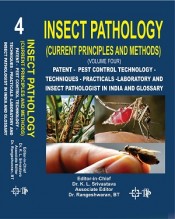
Insect Pathology (Current Principles and Methods) is a comprehensive four-volume compendium that presents an in-depth analysis of the principles, practices, and evolving technologies in the field of insect pathology, with a particular focus on biological pest management and its implications for sustainable agriculture. Volume One explores the foundational aspects of entomopathogenic bacteria and viruses, including Bacillus thuringiensis, baculoviruses, and other microbial agents used in integrated pest management. It covers their biology, mode of action, resistance management, and biopesticide formulations. Volume Two focuses on fungi, protozoa, and nematodes, delving into their mass production, application methods, and innovative uses in pest suppression, including advances like nanomycopesticides and endophytic fungi. Volume Three bridges biotechnology, transgenics, genomics, formulation science, insect immune responses, and statistical analysis, addressing how modern tools can enhance pest control efficacy while ensuring environmental safety. Volume Four broadens the scope to include patents, lab infrastructure, pest control technologies, regulatory frameworks, laboratory techniques, practical experiments, and the critical need for trained insect pathologists in India. It also includes insights into climate change impacts, laboratory equipment, media formulations, and a glossary of key terms. Together, this set serves as an authoritative reference for researchers, academicians, students, practitioners, and policymakers in the disciplines of entomology, plant protection, pathology, biotechnology, and integrated pest management, offering a holistic and cutting-edge approach to managing insect pests through microbial interventions.
Insect Pathology (Current Principles and Methods) Vol. 1-4 set by K.L. Srivastava.
2300 pages · English · Published 2025
Subjects: Agriculture, Entomology, Fisheries Science, Plant Pathology
About Author
Dr. K. L. Srivastava F.E.S.I., F.I.S.B.A., F.S.P.S.I., F.S.P.P.S.I, F.A.E.B.I
Dr. K.L. Srivastava, an eminent Insect Pathologist of India, was formerly Principal Scientist (Entomology) at the Division of Entomology, ICAR-Indian Agricultural Research Institute (IARI), New Delhi. Dr. K. L. Srivastava took his Bachelor’s Degree in Agriculture (1963), Master’s Degree in Agricultural Zoology (1966) with prestigious “Stood first in order of Merit in M. Sc. Certificate” and got his coveted D.Phil Degree (1988), all from the University of Allahabad, Allahabad, India. His good piece of dissertation in D.Phil on “Comparative toxicological studies on the effect of Bacterial insecticide and calcium arsenate on castor semilooper, Achaea janata Linn.” earned appreciation amongst the scientific fraternity. K. L. Srivastava started his Career as Research Assistant in 1968 at the Indian Council of Agricultural Research (ICAR), New Delhi and worked there till 1975. He was elevated to serve as Scientist for a brief period till 1976. Thereafter, he joined and served in the post of Junior Scientist from 1976 to 1982 in the Indian Council of Agricultural Research. (ICAR), New Delhi.
Dr. K. L. Srivastava elevated as Senior Scientist and served in the position from 1983 to 1998, and then he held the coveted post of Principal Scientist from 1998 to till his superannuation of January 2006. Dr. K. L. Srivastava with his commendable experience of 38 years in Research and Teaching, has guided M. Sc. and Ph. D. Students, and also published 38 Research Papers and one Book and 3 Book Chapters to his credit. His significant achievements include the development of novel “PUSA BT” A Water Dispersible Powder (WDP) Formulation based on Bacillus thuringiensis for management of diverse lepidopteran pests, in collaboration with his then research student Dr. T.V. Prasad, now positioned as Principal Scientist in ICAR-CRIDA, Hyderabad. Dr. K.L. Srivastava also achieved significant success on the studies, on Ultrastructural changes in midgut cells of Helicoverpa armigera due to Bacillus thuringiensis var. kurstaki an isolate BTS 42" studies carried out by research student, Haris Kumar, Chief Technical Officer, ATIC, ICAR- IARI, New Delhi, and on pioneer in collection, identification and characterization of Granulosis Virus (GV) from Achaea janata; Protozoa, Nosema sp. of cutworm, Agrotis ypsilon and a promising entomopathogenic fungus, Beauveria bassiana from Chilo partellus, all are playing pivotal role in biological control system of crop pests.
Dr. K. L. Srivastava is a recipient of several awards, and fellowships to name a few: Lifetime Achievement Award (2024) - Conferred by Pragati International Scientific Research Foundation. India. Dr. Harvansh Singh Lifetime Achievement Award (2024) Conferred by Swami Sahajanand College, Jehanabad, Bihar, India. Fellowship Award (2003) - Conferred by Bioved Research Society, Allahabad. Editor - in- Chief of Insect Pathology (Current Principles and Methods). Books are in four Volumes: -Volume one (Bacteria and Virus), Volume two (Fungi, Protozoa and Nematodes). Volume Three (Biotechnology, Transgenics, Formulation, Immune System and Statistical Analysis Tools) and Volume Four (Patent, Pest Control Technology, Techniques, Practicals, Laboratory and Insect Pathologist in India and Glossary)
Prof.Dr.V.AMBETHGAR, Ph.D,, FUWAI, FPPAI, FSPPS (IARI), FIBR, FSESc, FSSc, FAZRA, LFESI (IARI), FIPS (IARI), FSBA (NBAIR), FPMHES (IIHR), FIARA, FBSS (TNSRO), Research Advisor ABI (USA) Prof. Dr. V. Ambethgar has more than 33 years of experience in the field of Crop Protection with unique specialization in handling “Entomopathogenic Endophytic Fungi for Pest Management System”. He started his carrier as an “Agricultural Officer” in the Agriculture Department, Government of Puducherry in 1991. He served in various capacities as Former Director, Tamil Nadu Rice Research Institute (TRRI), Aduthurai In Tamil Nadu Agricultural University (TNAU), Former Dean, JSA College of Agriculture and Technology, TNAU, Tamil Nadu. He is presently positioned as Professor and Head, Department of Entomology, TNAU, Triruchirappalli, Tamil Nadu, India,
Prof. V. Ambethgar, has significantly contributed for teaching, research and extension in Tamil Nadu Agricultural University. He has handled more than 10 externally funded projects of state/central agencies including ICAR, GOI-DST, GOI-DCCD, etc. He is recipient of several awards from reputed scientific organizations including Indian Science Congress Award, Department of Science & Technology, Ministry of Science & Technology, Government of India, Best Researcher Award, Scientist of Excellence in Niche Area of Research in Entomology by Tamil Nadu Agricultural University, and several other recognitions for his outstanding professional excellence. He has been elected Fellow (s) of many scientific bodies, notably The Entomological Society of India (ESI), IARI, New Delhi; Indian Phytopathological Society (IPS), IARI, New Delhi, The Society for Biocontrol Advancement, NBAIR, Bengaluru, The Association for Pest Management in Horticultural Ecosystem, IIHR, Bengaluru, The Bibliographical Society of America, USA, besides an active Life Member in more than 45 premier scientific societies in India and abroad.Prof. V.Ambethgar has authored 12 textbooks to his credit; besides having published 115 scientific papers, 18 Reviews, 23 Book chapters, 16 Technical Bulletins, 12 Teaching Manual and numerous popular science articles. Prof. Ambethgar has guided many PG students. He has been ‘Visiting Scientist” to the Federal University of Pernambuco, Recife, Brazil as well as to the University of São Paulo, Piracicaba, São Paulo, Brazil for collaborative research on “Endophytic Microorganisms in Cashew”, besides, he has visited countries like Thailand, Taiwan, West Indies, Sri Lanka, Malaysia, Cambodia and Vietnam as resource person for chairing scientific events, invited talk, panel discussion and for attending workshops, conferences and related assignments for the benefit of diverse stakeholders.
Content
VOLUME ONE - BACTERIA AND VIRUS
�Introduction to Entomopathogens. �History of Insect Pathology and Overview. �History of Insect Pathology. �History of Insect Pathology. �History of Insect Pathology in ICAR-Indian Agricultural Research Institute, New Delhi. �History of Insect Pathology in India. �Principles of Insect Pathology. �Epizootiology. �Bacteria Basics. �Bacillus thuringiensis – Current Aspects in Biological Control and Formulation. �Entomopathogenic Bacteria. �Bacterial Endophytes in Biotic Stress Management of Plants. �Methods in Application of Bacillus Thuringiensis for Biological Control. �Management of Insect Resistance to Bacillus thuringiensis Toxins. �In Pursuit of Modern Control Strategy: Entomopathogens as a Potent Crusader Against White Grub Pests. �Baculoviruses. �Principles of Baculovirus, NPV and GV. �Entomopathogenic Viruses. �Entomo-Pathogenic Virus in Insect Pest Management. �Formulation of Biopesticides.
VOLUME TWO - FUNGI- PROTOZOA AND NEMATODE
�Principles of Entomopathogenic Fungi. �Harnessing Potential of Potent Entomopatogens in Suppressing Obnoxious Insect Population of Forage Crops and Grasslands. �Infection of Insects by Fungi. �Technological Innovations in the Development and Use of Nanomycopesticides for Sustainable Pest Management: Benefits And Challenges. �Production and Pathogenicity of Entomopathogenic Fungi. �Unlocking the Potential of Entomopathogenic Fungi (EPF) in Sustainable Pest Management. �Mass Production of Entomopathogenic Fungi. �Mass Production and Formulation of Entomopathogenic Fungi. �Preservation and Storage of Entomopathogenic Fungi. �Prospects of Endophytic Entomopathogenic Fungal Communities as Novel Resources for Biotic Stress Management in Maize (Zea Mays L.) Production Systems. �Potentials of Fungal Entomopathogens for Biological Suppression of Sucking Pests in Crop Production System. �Principal of Entomopathogenic Nematodes. �Entomopathogenic Nematodes. �Mass Production and Formulations of Entomopathogenic Nematodes. �Entomogenous Protozoa as Biopesticides. �Use of Entomopathogenic Microbes for Management of Insects Infesting
Stored Food Commodities Including Food Grains.
VOLUME THREE - BIOTECHNOLOGY - TRANSGENICS - FORMULATION - IMMUNE SYSTEM AND STATISTICAL ANALYSIS TOOLS
�Genomics for Entomopathogens. �Current Biotechnological Approaches in Insect Pathology. �Current Biotechnological Approaches in Insect Pathology. �Biotechnological Tools in Pest Management. �Role of Transgenics in Insect Pest Management. �An Overview of Transgenic Plant Development and Regulatory Framework. �Genetic Modification in Insect Pathogens and Susceptible Crop – Exploiting Genomics in Modern Age. �Statistics and Statistical Analysis in Insect Pathology. �Statistical Methods Used to Unveil the Impact of Microbial Pesticides on Sustainable Insect Pest Management in Agricultural Systems. �Formulation. �Virulence Factors of Entomopathogenic Microbes. �Immune System. �Resistance. �Insect Defence Against Microbial Invaders. �Safety and Regulations for Microbial Insecticides. �Safety Testing and Registration of Bio-Pesticides
VOLUME FOUR - PATENT- PEST CONTROL TECHNOLOGY - TECHNIQUES -PRACTICALS - LABORATORY AND INSECT PATHOLOGIST IN INDIA AND GLOSSARY
�Patent Registration. �Patent Laws in India: Basics You Must Know. �Laboratory Equipments and Materials for Insect Pathology Laboratory. �Equipments Used In Insect Pathology. �Trends and Applications in Pest Control Technology. �Establishing State-of-the-Art Insect Pathogen Laboratory. �Techniques in Insect Pathology: Principles and Practices. �Modern Appliances, Equipments and Technological Appliances in Insect Pathology. �Practical Experiments In Insect Pathology. �Insect Pathology-Need for a Separate Subject for Teaching and Research in College and University. �Name of Laboratory and Insect Pathologists in India. �Insect Pathology: A Key Player in Insect Pest Management and Market Dynamics in India. �Climate Change and its Impact on Insects and Insect Pathogens in Agriculture. �Stains and Staining Procedure. �Showcasing Growth Media for Production and Application of Entomopathogens in Microbial Pest Control. �Glossary.